About six months ago I took it into my head to run a half marathon. I can't say exactly why. It was a mixture of pride, a need to fit in, a desire to eat more ice cream, and an assortment of other ill-conceived motives which disintegrated once training became hard. I about gave up. Getting out of bed at 6:30 am to run 8 miles on a Saturday requires a willpower motivated by something stronger than sheer pride. Yet soon, a deeper, truer, motivation took root. It grew slowly and took shape over months and weeks of long runs. It was a motivation to reach a new milestone, to push my body out of its comfort zone, and to prove to my 16-year-old self that I CAN run.
Yesterday I completed my half marathon. As I rounded the last bend and saw the people standing on the bridge at the finish, it wasn't status, bragging rights, or ice cream that I was thinking about at that moment. I was thinking of that girl that used to struggle to run a lap on the track. That girl who dreaded the bi-annual gym class miler and the epic humiliation that came along with it. That girl was me. And yet, that same girl was sprinting toward the finish line on the last .1 mile of a 13.1 mile race. That thought is what got my burning legs across that line, and it got them there faster than in all my training runs. Not only had I completed a feat that I could have only dreamed of ten years ago, but I ended up in the top third of women finishers.
Now, that's the story of the glorious ending. However, the physical transformation of a distance runner is, by its very nature is not a single moment of victory over gluttony, laziness, or weakness. Transformation is not crossing the finish line. It is many, many mornings of long, hot, sweaty runs on muggy summer days. It is setting the alarm clock earlier and earlier. It is choosing bran flakes over donuts. For me, transformation also meant popping blisters on my toes and feeling relief when the ugly callouses finally formed. Transformation involved periods where the heat and exhaustion made me sick (I'll spare you the details on that one). It required money toward shoes and appropriate gear. It left me hobbling up and down the many stairs in my townhouse. And it probably resulted in my swallowing more than a few bugs. What's more, the work doesn't end now that I've crossed the finish line. Next weekend, I'll be up early, lacing up those sneakers and heading out on the trail.
When I set out to achieve this goal, little did I know that the greatest transformation of it all would be a spiritual one. Running for 2+ hours every weekend has given me ample time to learn about my human weakness and God's ultimate strength. A couple weeks ago when my Pastor read Hebrews 12:1 these words resonated with me as they never have before:
"Therefore, since we are surrounded by so great a cloud of witnesses, let us also lay aside every weight, and sin which clings so closely, and let us run with endurance the race that is set before us..."
There is something about running that just makes one understand this analogy better. When I come up the last hill of my run I know what running with endurance is all about. I really get laying aside every weight and sin that clings closely. The reality just continues for me as I read on in Hebrews 12: "For at the moment all discipline seems painful rather than pleasant" (vs. 11) and perhaps most poignantly for me, "strengthen your weak knees..." (vs. 12)
Obviously this passage of Scripture is an analogy to the Christian life. But it is through running that this passage has come alive. In our Christian life we are surrounded by a great crowd of witnesses, much like runners on the W&OD are surrounded by other exercise fanatics every Saturday and Sunday morning. Though I run alone, I always feel a sense of goodwill and camaraderie among the runners on the trail. I've had encouragement from strangers more than a few times. We all know and understand what the other is going through. We know the lows of pain and the soaring highs from those endorphins surging through our bodies. While Hebrews 12 in particular applies to Biblical figures, two hour runs give me time to thank God for the "great cloud of witnesses" in my own life - my family and the other faithful believers in my hometown, and my wonderful, mission-oriented, church here in NoVA.
I've also learned about endurance. That last mile is tough. The sun is up. The heat is rising. Pain surges through my legs. By the last hill my strength is gone. But on every long run, I come to a point where prayer alone keeps me going. I pray for a second wind, I pray for endurance. When I read Hebrews 12 now I think of that last rise where I am running uphill and across a bridge. With many miles behind and 3/4 mile to go, I'm silently praying: "God, help me, help me up this hill." God comes through. That bridge has become my "ebenezer" - my stone of help. That bridge reminds me that God is there. My endurance in life and in running comes from Him.
And what about those "weak knees?" My left knee to be precise. The thing I have grown to love about running is that it reminds me of my weakness. As I push myself harder and longer, I begin to realize the limits of my body. In getting to that place of weakness there is something overwhelmingly good about having nothing to rely on but God's strength. God's strength alone helps me to run through pain, both literally and figuratively.
These long runs have given me ample time for prayer and reflection, time that I try not to waste. I have even come to find joy in the moments where prayer takes over in the heat of pain and exhaustion. I have begun a transformation into a Hebrews 12 runner, but much like my physical transformation, my spiritual transformation is not complete. It is a lifelong commitment that relies on continued training. So for now I'll continue meeting with the "founder and perfecter" of my faith every Saturday morning.
Sunday, September 15, 2013

Sunday, September 1, 2013
Ireland by Frank Delaney
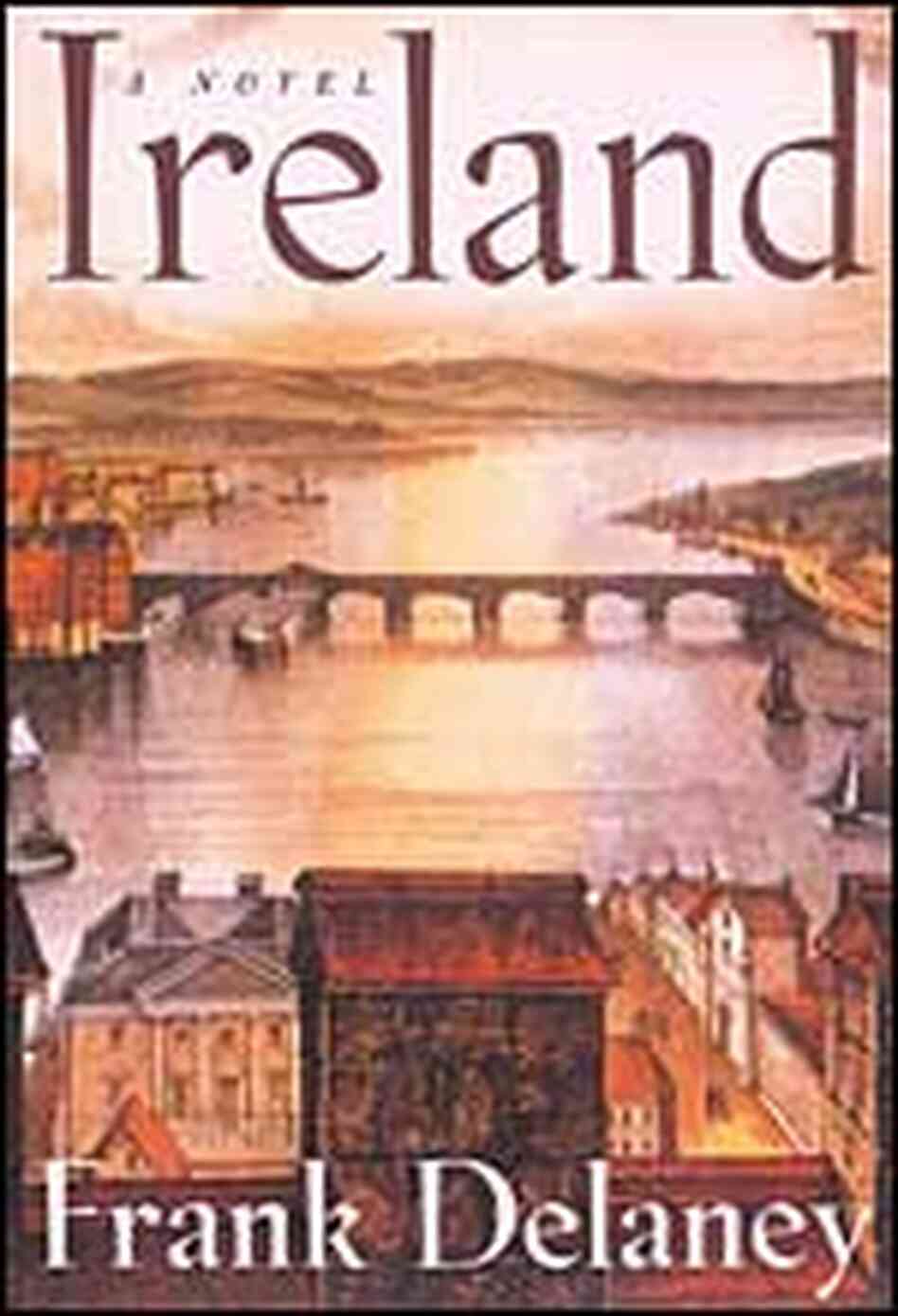
My husband and I plan on traveling to Ireland next summer, so I have begun my preparatory literary tour. This book was the first to come up in the library catalog when I typed "Ireland," and thus it become the first of several books about Ireland that I plan to read before leaving on our trip.
Frank Delaney's Ireland fuses history with legend, present with past, and old age with the inquisitiveness of youth. It is a book about heritage - the heritage of an entire people and a single family. It is the story of a young boy named Ronan whose life is radically altered by one of the last itinerant storytellers to traverse the hills and valleys of Ireland. The story begins in the 1950s when an elderly storyteller happens upon Ronan's house and asks for lodging in exchange for stories. The storyteller stays with Ronan's family for several nights and captivates the town with his telling of Irish folklore. When the storyteller abruptly leaves, giving no address and no other contact information, Ronan is devastated. Yet the storyteller knows that this young boy, so enraptured by the tales of Ireland, will grow up to be a storyteller in his own right. Throughout Ronan's teenage and young adult years he seeks to find the storyteller. Though the storyteller leave clues for Ronan along the way, the old man's whereabouts remain cloaked in mystery. Yet throughout these years of searching, Ronan travels the Irish countryside and learns the history of his land. Sometimes he hears the storyteller's own tales, recounted secondhand by a farmer or tavern-keeper, sometimes he learns the history from other voices, like those of his scholarly professor. All the while Ronan is not only piecing together the history of his beloved country, but he is also gaining insights into his own rich and scandalous heritage. And yet, Ronan's quest for the storyteller is ever haunted by the fear that he will never reach him, that the old man will die before Ronan can learn the trade. Why, you might ask, does the storyteller remain so elusive? Well, to find that answer you'll just have to read the book!
Delaney alternates between Ronan's story and the tales of Ireland's history. The history told here is a mixture of folklore, personal stories, and memory. To me, this is the only way to tell Ireland's history. Ireland is such a rich and mythical place that legends and fairy tales must form an integral part of its past. For centuries before the Irish were literate, their history was passed down through storytellers who brought the past alive through their captivating and sometimes fantastical tales. Thus, we the readers, must throw textbook history aside and embark on this journey with imagination in tow. The storyteller provides us with some facts, some myth, and many riveting stories of the people whose ordinary lives have integrally shaped their homeland. He transports us back to the Neolithic era, when tribal peoples roamed the green island amidst fairies, spirits and other mythical creatures of old. He will take us through the age of Viking invasions and the coming of St. Patrick, then up to the Norman invasions and the Great Potato Famine. The Normans, who came to Ireland via Britain initiated the slow seizure of Irish political independence. However, the Irish spirit remained alive and free, fueled by the stories of their forefathers. Their gallant fight against Britain brings the Southern counties out from under her thumb in the early 20th century, leaving the Northern counties seething even to this day. By the end of the book we have met kings and queens, warriors and monks, landlords and peasants. Thus, it not a top down history or even a bottom-up history. It is a collection of stories - stories that encapsulate all the allure that Ireland has to offer.
This is not a textbook, and by no means should it be considered a full account of Ireland's history. Yet, legends and stories allow us to really understand the character of the Irish people. They are not all descendants of the early tribal natives, but rather a fiery mix of native Irish, redheaded Vikings, and Normans. They've fought famine, and they've fought Britain. Both were strong foes, capable of winning many battles, but never capable of eradicating the Irish spirit. Delaney's book, in many ways, is the history of the oppressed, for Ireland is a land always dominated by stronger civilizations. While most of history is written by the victors, the stories of the Irish themselves are stories written and told by the conquered, passed down through the years and now told to their children, who still see their land divided, their religions at odds, and the turbulent forces of division ever-looming.
For one who is used to reading rather dry history texts full of facts and dates, this was an exciting journey for both the intellectual and imaginative facets of my mind. I felt that Delaney's book a beautifully written, fascinating start to my literary tour!
Subscribe to:
Posts (Atom)